Dorothy Parker the Art of Fiction Culture Pick of the Day Marion Capron Paris Review
Fifty-fifty the greats don't blast it on the beginning try.
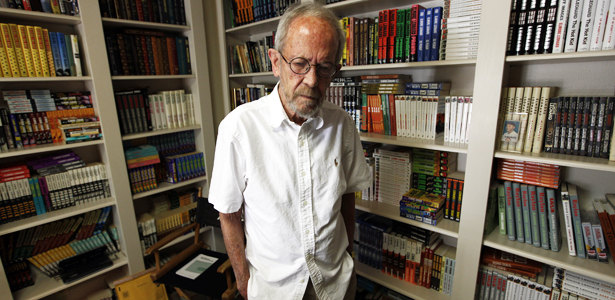
Information technology's a new year, and hopeful souls around the earth are working diligently on their plans to revise—their health, their attitudes, their lives. Simply who knows more about the art of revision than great writers? Below, 20 famous writers share their thoughts on revision. The consensus? Information technology's pretty of import.
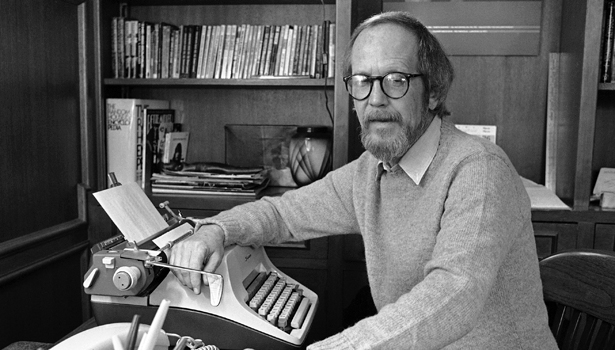
"If information technology sounds similar writing, I rewrite information technology." —Elmore Leonard, Newsweek, 1985
"Whenever you feel an impulse to perpetrate a piece of exceptionally fine writing, obey it—wholeheartedly—and delete it earlier sending your manuscript to printing. Murder your darlings." —Sir Arthur Quiller-Burrow, On the Art of Writing, 1916
"I take rewritten—often several times—every word I have ever published. My pencils outlive their erasers." —Vladimir Nabokov, Speak, Retentiveness, 1966
"Generally when I think of pacing, I go back to Elmore Leonard, who explained it and then perfectly by saying he but left out the tiresome parts. This suggests cutting to speed the pace, and that'due south what well-nigh of the states finish up having to do (kill your darlings, kill your darlings, even when it breaks your egocentric little scribbler's heart, kill your darlings) ... I got a scribbled comment that changed the mode I rewrote my fiction once and forever. Jotted beneath the motorcar-generated signature of the editor was this mot: 'Not bad, but PUFFY. Y'all demand to revise for length. Formula: 2nd Draft = 1st Draft - ten%. Proficient luck.' —Stephen King, On Writing, 2000
"Substitute 'damn' every fourth dimension you're inclined to write 'very;' your editor will delete information technology and the writing will exist just every bit it should be." —Mark Twain
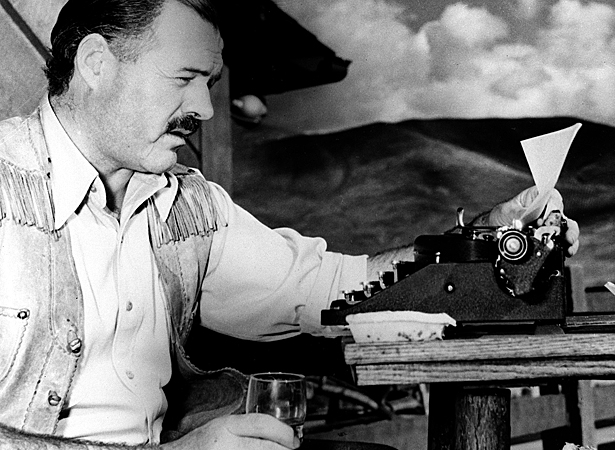
Interviewer: How much rewriting exercise you do?
Hemingway: It depends. I rewrote the catastrophe of Farewell to Arms, the final page of it, 39 times earlier I was satisfied.
Interviewer: Was at that place some technical problem there? What was it that had stumped you?
Hemingway: Getting the words right. —Ernest Hemingway, The Paris Review Interview, 1956
"I don't write easily or chop-chop. My showtime draft usually has simply a few elements worth keeping. I have to find what those are and build from them and throw out what doesn't work, or what simply is non alive." —Susan Sontag
"I'm all for the scissors. I believe more in the scissors than I practise in the pencil." —Truman Capote, Conversations With Capote, by Lawrence Grobel, 1985
"Read over your compositions and, when yous run into a passage which y'all remember is especially fine, strike information technology out."
—Samuel Johnson
"Your eloquence should be the retainer of the ideas in your head. Your rule might be this: If a sentence, no affair how fantabulous, does non illuminate your bailiwick in some new and useful style, scratch information technology out." —Kurt Vonnegut, How to Use the Ability of the Printed Word
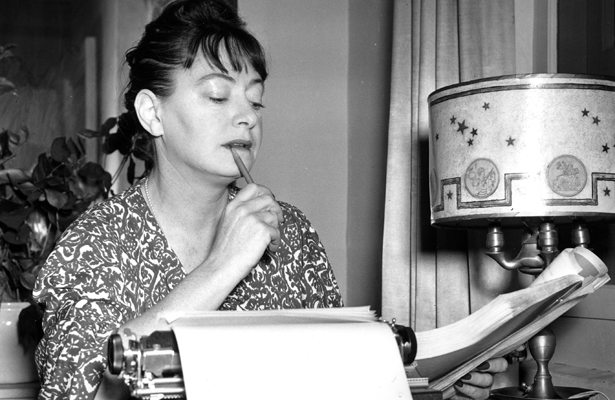
"It takes me six months to do a story. I remember information technology out and write information technology sentence past sentence—no commencement draft. I can't write five words just that I can alter seven." —Dorothy Parker, The Paris Review Interview, 1956
"Put down everything that comes into your caput and and so you're a writer. Simply an author is one who tin can gauge his own stuff's worth, without compassion, and destroy virtually of information technology." —Colette, Coincidental Run a risk, 1964
"Writing and rewriting are a constant search for what it is one is saying." —John Updike
"Throw upward into your typewriter every morn. Clean up every noon." —Raymond Chandler
"Anyone and everyone taking a writing grade knows that the secret of adept writing is to cut it back, skin it downward, winnow, chop, hack, prune, and trim, remove every superfluous give-and-take, compress, shrink, compress ...
Actually, when you think about information technology, non many novels in the Spare tradition are terribly cheerful. Jokes you tin can usually pluck out whole, by the roots, so if you're doing some heavy-duty prose-weeding, they're the first to go. And there's some stuff nearly the whole winnowing procedure I just don't get. Why does it always stop when the work in question has been reduced to sixty or seventy grand words—entirely coincidentally, I'm sure, the minimum length for a publishable novel? I'1000 sure you could become it downwardly to 20 or thirty if you tried difficult enough. In fact, why end at xx or 30? Why write at all? Why not just jot the plot and a couple of themes downward on the dorsum of an envelope and leave it at that? The truth is, there'southward nothing very commonsensical about fiction or its creation, and I suspect that people are desperate to make it sound manly, back-breaking labor because it's such a wussy thing to practice in the get-go identify. The obsession with austerity is an attempt to compensate, to brand writing resemble a real job, similar farming, or logging. (It'southward also why people who work in advertising put in twenty-hour days.) Go along, immature writers—treat yourself to a joke, or an adverb! Spoil yourself! Readers won't mind!" —Nick Hornby, The Polysyllabic Spree
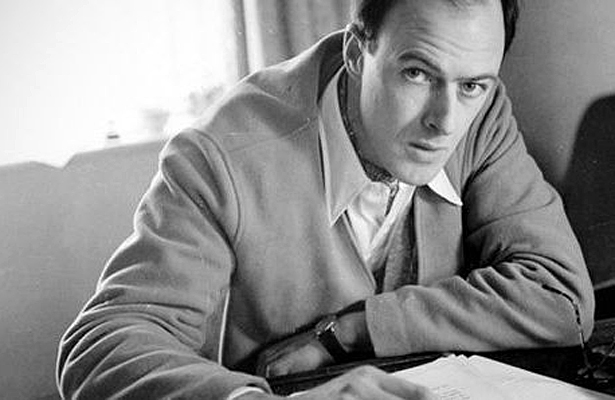
"By the time I am nearing the terminate of a story, the first role will have been reread and altered and corrected at least one hundred and fifty times. I am suspicious of both facility and speed. Adept writing is essentially rewriting. I am positive of this." —Roald Dahl
"The best advice I can give on this is, once information technology'due south done, to put it away until you can read it with new eyes. Finish the short story, print it out, and so put it in a drawer and write other things. When you're ready, selection it up and read it, as if you've never read information technology before. If there are things you lot aren't satisfied with every bit a reader, go in and set up them as a writer: that's revision." —Neil Gaiman
"Reread, rewrite, reread, rewrite. If information technology still doesn't piece of work, throw information technology away. It'due south a nice feeling, and you don't desire to be cluttered with the corpses of poems and stories which take everything in them except the life they need." —Helen Dunmore
"Don't await back until you lot've written an entire draft, just brainstorm each day from the terminal judgement you lot wrote the preceding twenty-four hours. This prevents those cringing feelings, and means that you have a substantial body of work before y'all become down to the real work which is all in the edit." —Will Self
"You never take to change anything yous got up in the center of the dark to write." —Saul Bellow
This post also appears on Flavorpill, an Atlantic partner site.
waddellhernight37.blogspot.com
Source: https://www.theatlantic.com/entertainment/archive/2013/01/my-pencils-outlast-their-erasers-great-writers-on-the-art-of-revision/267011/
0 Response to "Dorothy Parker the Art of Fiction Culture Pick of the Day Marion Capron Paris Review"
Post a Comment